





Oil and Phosphorus Removal in Battery Recycling with Sunresin Resin Solutions
Improving the Purity of Lithium-Bearing Process Streams
As increasing volumes of lithium-ion batteries reach the end of their service life, hydrometallurgical recycling is playing an increasingly important role in recovering valuable metals such as lithium, nickel, cobalt, and manganese.
Solvent extraction, precipitation, and related separation processes allow these valuable metals to be recovered efficiently. However, they also introduce new purification challenges.
One of these challenges is oil carryover from the solvent extraction process. Another is phosphorus contamination originating from both organic extractants and residual battery electrolyte components.
Although oil and phosphorus may appear to be separate impurities, in actual battery recycling processes they are closely connected. Organic extractants and diluents can enter the aqueous phase through entrainment, incomplete phase separation, or emulsification, while phosphorus-containing extractants and electrolyte residues introduce multiple forms of phosphorus into the process stream.
If these impurities are not effectively controlled, they can affect downstream lithium salt purity, process stability, crystallization behavior, and final product quality.
Sunresin has developed an integrated resin purification approach for lithium-bearing streams that combines Seplite® LXA series oil-removal resins with a selective phosphorus-removal resin. By treating oil and organic phosphorus first and then removing residual inorganic phosphorus, the process provides a practical route to higher-purity recycled lithium products.
Where Oil and Phosphorus Come from in Hydrometallurgical Battery Recycling
Solvent extraction is widely used in battery recycling to separate nickel, cobalt, manganese, lithium, and other valuable metals.
During operation, the organic phase becomes more hydrophilic after saponification. Extractant entrainment, diluent carryover, emulsification, and incomplete phase separation can therefore introduce organic material into the raffinate or stripping solution.
In some operating conditions, oil concentrations in these aqueous streams may reach approximately 50–100 mg/L.
This residual organic material can directly affect downstream product specifications. It is also an important source of organic phosphorus because commonly used extractants such as P204 and P507 are themselves phosphorus-containing organic compounds.
Phosphorus contamination can also originate from the spent battery material.
Lithium hexafluorophosphate, LiPF₆, which is widely used as an electrolyte salt in lithium-ion batteries, can remain in the recovered material. During hydrometallurgical processing, LiPF₆ and its hydrolysis products may contribute phosphate, difluorophosphate, monofluorophosphate, and other phosphorus-containing species to the process solution.
Phosphate may also interact with metal ions in the liquid phase and form more complex species, increasing the difficulty of selective phosphorus removal.
The result is a challenging impurity system in which oil, organic phosphorus, inorganic phosphorus, metal ions, salts, and valuable lithium may all coexist.
For battery recyclers, effective purification therefore requires more than simply lowering one impurity concentration. The treatment process must remove unwanted components selectively without sacrificing valuable metals or introducing new contaminants.
Why Conventional Oil Removal Can Be Insufficient
Activated carbon has traditionally been used for oil removal because of its relatively low initial cost and simple operating principle.
However, activated carbon mainly relies on broad-spectrum adsorption rather than highly selective capture. In complex battery recycling solutions, this can limit its effectiveness for deep oil removal and may also result in the co-adsorption and loss of valuable components.
Activated carbon is also difficult to regenerate efficiently and generally has a limited adsorption cycle before replacement becomes necessary. For high-purity battery-grade process streams, these limitations can lead to unstable outlet quality and higher long-term operating costs.
Polymeric adsorption resin provides a different approach.
Sunresin Seplite® LXA series oil-removal resins are porous polymeric adsorbents designed to utilize hydrophobic interactions to separate organic substances from aqueous process streams. They can capture emulsified oil, dissolved organic components, and dispersed oil droplets while maintaining good mechanical and chemical stability.
The resins provide high adsorption capacity and rapid adsorption kinetics and can be regenerated for repeated use. Depending on the application, regeneration may be performed using steam or suitable alcohol-based regeneration methods.
Because the process does not require the addition of calcium, aluminum, or other precipitating ions, it is particularly suitable for high-purity metal and lithium-bearing solutions where the introduction of new contaminants must be minimized.
The Challenge of Removing Phosphorus Without Introducing New Impurities
Phosphorus removal presents a different technical challenge.
Part of the organic phosphorus load can be reduced together with oil during the upstream adsorption stage. However, residual inorganic phosphorus requires a more selective treatment method.
Chemical precipitation is commonly used for phosphate removal in conventional wastewater treatment. Calcium or aluminum salts are added to form insoluble phosphorus-containing precipitates that can then be separated.
For battery recycling process solutions, however, this approach can create a new purity problem.
Adding calcium or aluminum salts introduces Ca²⁺, Al³⁺, and associated counterions into the solution. These additional ions may interfere with downstream lithium salt production and increase the burden on subsequent purification steps. Chemical precipitation also generates additional sludge that must be separated and disposed of.
Conventional adsorption materials may effectively remove phosphate but can provide limited performance against more complex phosphorus species.
Traditional ion exchange resins are suitable for some low-concentration phosphorus applications, but when phosphorus loading becomes high, rapid breakthrough and frequent regeneration can significantly reduce operating efficiency.
Sunresin therefore developed a dedicated phosphorus-removal resin using a porous polymeric support combined with selective phosphorus-binding functionality. The objective is to achieve preferential adsorption of target phosphorus species while avoiding the introduction of additional impurity ions into the process solution.
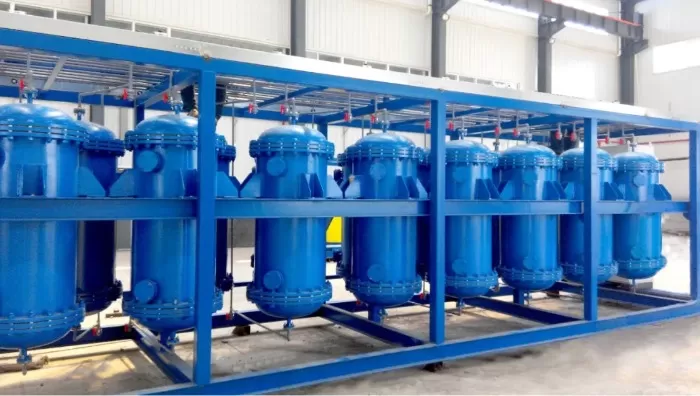
Sunresin’s Combined Purification Strategy: Oil Removal Followed by Phosphorus Removal
For lithium-bearing battery recycling streams, Sunresin approaches oil and phosphorus removal as a coordinated purification process rather than two isolated treatment steps.
The first stage uses Seplite® LXA series oil-removal resin.
The resin selectively removes residual extractants, diluents, emulsified oil, dissolved organic substances, and other hydrophobic contaminants from the aqueous stream. Because extractants such as P204 and P507 contain phosphorus, removing these organic materials also reduces part of the organic phosphorus load before the solution reaches the phosphorus-removal stage.
This first step therefore performs two functions: it protects downstream purification equipment from organic contamination while simultaneously reducing the amount of phosphorus that must be handled later.
The second stage uses Sunresin’s selective phosphorus-removal resin.
After the majority of oil and organic phosphorus have been removed, the phosphorus-removal resin can focus on the remaining inorganic phosphorus species under more stable feed conditions. The resin selectively adsorbs phosphorus without requiring calcium or aluminum precipitation chemicals, helping preserve the purity of the lithium-bearing solution.
For more complex phosphorus species, including fluorinated phosphate species or phosphorus associated with metal complexes, Sunresin can conduct laboratory testing using the actual customer solution. Resin combinations and operating parameters can then be adjusted according to the specific composition of the feed.
This staged approach allows each resin to perform the task for which it is best suited and improves the overall stability of the purification process.
Case 1: Seplite® LXA Series Resin for Oil Removal from Battery Recycling Raffinate
A battery recycling company required deep removal of residual oil from a process stream following solvent extraction.
The raffinate contained entrained extractant, diluent, emulsified oil, and dissolved organic components. The oil concentration could reach up to 100 ppm. If this stream entered downstream processing without further purification, the residual organic material could affect final product quality and increase the organic phosphorus load.
The customer selected Sunresin Seplite® LXA series oil-removal resin for continuous polishing of the solution.
The industrial system operated at a flow rate of 16 m³/h. The inlet oil concentration was controlled at no more than 100 ppm, while the process temperature remained at or below 30°C under approximately neutral pH conditions. Suspended solids were maintained below 1 ppm to support stable resin-bed operation.
After treatment through the Seplite® LXA resin system, the outlet oil concentration was consistently reduced to no more than 10 ppm.
The system maintained the full 16 m³/h operating flow while achieving approximately a 90% reduction from the maximum specified inlet oil concentration. Suspended solids remained at or below 1 ppm, and the resin treatment did not introduce additional impurity ions into the process solution.
For the customer, the project provided more than oil removal alone. Reducing residual organic material also lowered the phosphorus load associated with entrained phosphorus-containing extractants, creating more stable conditions for subsequent purification and helping protect the quality of downstream lithium or metal salt products.
Because the resin can be regenerated and reused, the process also provides a more sustainable long-term operating model than single-use adsorbents.
Case 2: Selective Phosphorus Removal from a Battery Recycling Process Stream
In another battery recycling project, Sunresin was asked to treat a low-concentration phosphorus-containing process solution.
The incoming phosphorus concentration was below 1.2 mg/L. Although this concentration was relatively low, the required product specification demanded further reduction of phosphorus before the solution could proceed to the next process stage.
The feed solution had a conductivity of approximately 3,000 μS/cm and a pH of 7, representing a neutral, salt-containing process environment.
At this low phosphorus concentration, conventional chemical precipitation would have required additional reagents while generating sludge and introducing unwanted calcium or aluminum ions. The customer therefore selected Sunresin’s selective phosphorus-removal resin for final polishing.
The process stream entered the resin treatment system at a continuous flow rate of 30 m³/h.
Under stable operating conditions, the phosphorus concentration was reduced from below 1.2 mg/L in the feed to below 0.2 mg/L in the treated solution.
The system maintained the full 30 m³/h treatment capacity without creating a production bottleneck. More importantly, phosphorus removal was achieved without introducing Ca²⁺, Al³⁺, or other precipitation-related impurity ions into the solution.
For a battery recycling process where the objective is to produce increasingly high-purity lithium-containing intermediates or lithium salts, avoiding secondary contamination can be just as important as the removal efficiency itself.
The regenerable resin system also provides a practical solution for long-term treatment of low-concentration phosphorus streams where conventional precipitation may be inefficient or difficult to control.
Why Oil Removal Should Come Before Phosphorus Polishing
The sequence of the two purification steps is important.
If oil, extractant residues, and other organic contaminants are allowed to enter the phosphorus-removal stage directly, they may interfere with mass transfer, occupy adsorption sites, foul the resin, or increase the effective phosphorus load entering the polishing unit.
Removing oil first creates a cleaner and more stable feed for the downstream selective resin.
The Seplite® LXA stage therefore acts not only as an oil-removal unit but also as a protection step for the entire downstream purification process. It reduces hydrophobic contaminants and part of the organic phosphorus contribution before the remaining phosphorus is addressed through selective adsorption.
This creates a logical purification pathway:
Solvent extraction is followed by oil and organic phosphorus removal, followed by selective inorganic phosphorus polishing, before the purified lithium-bearing solution proceeds to downstream concentration, conversion, or lithium salt production.
The exact configuration depends on the customer’s process chemistry, and not every battery recycling stream requires the same resin combination. This is why actual feed testing remains an important part of process development.
Laboratory Testing for Complex Battery Recycling Solutions
Battery recycling solutions are among the most chemically complex streams encountered in hydrometallurgy.
Their composition depends on battery chemistry, pretreatment method, leaching conditions, extraction route, extractant type, phase separation efficiency, and upstream impurity-removal processes.
For this reason, Sunresin does not recommend determining resin performance solely from a theoretical water analysis.
Actual feed samples can be evaluated in the Sunresin laboratory to determine oil adsorption behavior, phosphorus removal efficiency, adsorption capacity, breakthrough characteristics, regeneration performance, and the potential interaction between target impurities and valuable metal ions.
For complex phosphorus systems, particular attention can be given to the forms in which phosphorus exists in solution. Phosphate, fluorinated phosphorus compounds, organic phosphorus residues, and metal-associated phosphorus species may respond differently to the same adsorbent.
Laboratory screening and pilot validation allow Sunresin engineers to determine whether a single resin or a staged combination is more appropriate and to optimize bed volume, flow velocity, loading cycle, regeneration conditions, and system configuration before full-scale implementation.
This reduces scale-up risk and helps ensure that the industrial solution protects both impurity specifications and valuable product recovery.
From Individual Resins to an Integrated Purification System
For Sunresin, advanced purification in battery recycling is not simply a question of supplying an adsorption resin.
The performance of an industrial purification system depends on the interaction between material selectivity, feed composition, process conditions, pretreatment, column configuration, regeneration, automation, and downstream production requirements.
Sunresin combines adsorption and separation materials with process development, equipment engineering, and automated system integration. This allows the company to support customers from laboratory resin screening and pilot testing through full-scale equipment design, manufacturing, installation, commissioning, and operating optimization.
For oil-removal applications, the system can be designed around Seplite® LXA resin capacity, organic loading, regeneration method, and required outlet specification. For phosphorus polishing, the design considers phosphorus concentration and speciation, conductivity, competing ions, flow rate, and downstream purity requirements.
When both impurities need to be controlled, the two technologies can be integrated into one coordinated purification process.
This “materials + process + equipment + system” model is particularly valuable in battery recycling, where the purity of intermediate streams directly affects the quality and economics of the final recovered products.
Supporting Higher-Value Lithium Resource Recovery
The purpose of battery recycling is not merely to process waste. It is to recover valuable materials at a quality that allows them to return to the battery supply chain.
As recycled lithium, nickel, cobalt, and manganese products move toward increasingly demanding specifications, impurity control becomes a critical part of the process.
Oil carryover may originate from solvent extraction. Organic phosphorus can accompany these oil components. Inorganic phosphorus can originate from electrolyte residues and their decomposition products. Treating each impurity independently without considering the entire process may simply move the problem from one stage to another.
Sunresin’s combined oil-removal and phosphorus-removal approach provides a more systematic solution.
Seplite® LXA series adsorption resins first reduce oil and organic phosphorus contamination. A selective phosphorus-removal resin then provides polishing of the remaining phosphorus without introducing new calcium or aluminum impurities. Regenerable resin technology allows both stages to operate continuously while keeping long-term material consumption under control.
From direct lithium extraction and hydrometallurgical metal recovery to spent battery recycling, fluoride removal, boron removal, oil removal, and phosphorus purification, Sunresin continues to expand its adsorption and separation solutions across the new energy value chain.
Backed by more than 400 multidisciplinary technical professionals and an integrated materials-and-equipment capability, Sunresin supports customers not only with individual separation materials but with complete industrial purification solutions—from process development to modular equipment and full-scale implementation.
For battery recyclers, the objective is clear: recover more valuable resources while removing the impurities that stand between an intermediate solution and a higher-quality final product.
Sunresin helps make that purification step more selective, more reliable, and easier to scale.
Free Quote
Resources
Adsorbent Resin
Bio-Pharmaceutical & Life Science
Enzyme Carriers
Hydrometallurgy & Mining
Chelating Resin
Chemical Industry
Chromatographic Media
Wastewater Treatment&Reuse
Food & Beverage Industries
Ion Exchange Resin
Civil & Industry Water Treatment
Equipments And Projects
Plant Extraction
Catalyst Resin
Solid Phase Peptide Synthesis
Product
Application
Contact Us
Sunresin Park,No.135, jinye Road, Xi’an Hi-tech Industrial Development Zone, Shaanxi-710076, China
seplite@sunresin.com
seplite_europe@sunresin.com
+86-29-89182091
Our Product List

Amino Acid Separation and Purification

Mobile Sorption Module for Gold Extraction

PFAS Removal

Bio-Pharmaceutical & Life Science
Modern biopharmaceutical technologies typically use biological microbial fermentation...

Chemical Industry
Purification of chemical compounds has become a vital part of most industrial processes.

Drinking Water Treatment
Drinking water is essential to life. Every day every human being has to drink and use water for food preparation.

Food & Beverage Industries
Food is closely related to everyone, and the finishing of food comes from people's relentless pursuit...

Hydrometallurgy & Mining
Hydrometallurgy is a technique for extractive metallugry involving the three general area...

Direct Lithium Extraction (DLE)
Sunresin is the major DLE lithium sorbent producer in China which mainly used for extraction lithium from salar brine and geothermal brine etc with high efficiency.

Industry Water Treatment
There are many uses of water in industry and, in most cases, the used water also needs treatment to render...

Plant Extraction
Plant Extraction is a process to gather the trace bioactive compounds from the tissue of a plant.

VOCs Treatment
With the widespread use of chemical products in the industry, more and more organic...

Wastewater Treatment
Wastewater treatment is the process of converting wastewater into an effluent that can be discharged
Latest News
03
2026 11
Sunresin Strengthens Raw Material Supply with Acquisition of Ningxia Baoyun New Materials
Sunresin has completed the acquisition of 100% of Ningxia Baoyun New Materials, strengthening its supply chain for divinylbenzene (DVB), a key raw material used in the production of adsorption and separation materials.
15
2026 07
Sunresin Nuclear-Grade Ion Exchange Resin Passes Product Appraisal, Supporting Reliable Nuclear Power Water Chemistry Control
Sunresin has successfully passed the product appraisal for its domestically developed nuclear-grade ion exchange resin, marking an important milestone in the development of high-performance chemical materials for nuclear power applications.
14
2026 07
Sunresin and ChromaGenix Partner to Expand Global Access to AAV Purification Technologies
The cooperation is designed to expand access to advanced AAV purification technologies and provide stronger regional support for cell and gene therapy developers across Asia, Europe and the Americas.
Leave a Message
Please send any questions you want to know, we will reply to you immediately.
Choose File
Submit