




From Etching Wastewater to Reusable Copper: Sunresin Chelating Resin Recovery Solution
Turning Copper-Bearing Wastewater into a Recoverable Resource
Before a printed circuit board becomes a finished product, it passes through multiple chemical processing stages. During copper etching, selected areas of copper are dissolved so that the required circuit pattern can be formed. At the same time, large quantities of copper ions enter the etching solution and subsequent wastewater streams.
Copper-bearing wastewater is commonly managed as hazardous waste. Its treatment requires qualified contractors, specialized handling, and ongoing disposal expenditure. However, from another perspective, these streams can also be viewed as unusually rich “liquid copper resources.” In some etching wastewaters, copper concentrations can reach several thousand milligrams per liter, which may be considerably higher than the copper grade found in many natural ores.
The technical challenge is therefore not limited to removing copper for compliant discharge. A more valuable objective is to selectively recover the copper, concentrate it into a reusable form, and return it to production or downstream utilization.
Sunresin provides an integrated solution combining SEPLITE® LSC-710 chelating resin with continuous ion exchange technology. The solution enables selective copper capture, deep wastewater purification, concentrated copper recovery, and automated industrial operation.
Where Copper-Bearing Wastewater Is Generated
Copper-containing liquid streams are generated in several important industrial sectors.
Printed circuit board manufacturing is one of the most common sources. Acidic copper chloride etching, alkaline ammoniacal etching, micro-etching, and electroless copper processes all introduce copper into process solutions and wastewater. Among these operations, the etching section usually produces some of the most concentrated copper-bearing streams.
Electroplating and surface treatment facilities also generate copper-containing wastewater, particularly through rinse water following copper-plating baths. Individual rinse streams may not have extremely high copper concentrations, but they are usually continuous, relatively stable, and generated in significant volumes. These conditions make them suitable for selective resin recovery.
In hydrometallurgical operations, copper may also be present in leach solutions from low-grade ores, tailings, and metallurgical residues. These solutions often contain lower copper concentrations together with large quantities of calcium, magnesium, and other impurities. Conventional recovery technologies may technically remove the copper, but the process economics can become unfavorable. A properly selected chelating resin can recover copper selectively without being strongly affected by the major background ions.
In all of these applications, copper has two identities. It is a regulated contaminant that must be removed, but it is also a valuable metal with a recoverable market value. Once the treatment process is designed around both objectives, wastewater compliance and resource recovery become part of the same solution.
Why Conventional Copper Treatment Processes Reach Their Limits
Chemical precipitation, electrolysis, and solvent extraction are widely used for copper treatment and recovery. Each technology has an appropriate application range, but none of them alone is ideal for every copper-bearing stream.
Chemical precipitation is relatively simple to operate and requires modest initial investment. Copper is converted into a hydroxide or sulfide precipitate and separated as sludge. However, the copper remains embedded in a hazardous solid waste. This transfers the problem from the wastewater to the sludge, requiring additional handling and disposal. Large sludge volumes, chemical consumption, and secondary waste treatment can substantially increase the total cost.
Electrolysis can produce relatively pure metallic copper and is attractive when the feed contains sufficiently high copper concentrations. As the copper concentration decreases, however, current efficiency falls sharply and electricity consumption rises. Electrolysis is therefore much less economical for medium- and low-concentration streams or as a final polishing technology.
Solvent extraction is a mature and reliable recovery process for high-flow and high-concentration solutions. At lower concentrations, organic extractant losses, entrainment, emulsification, and third-phase formation can become more serious. The process can also be sensitive to impurities such as calcium, magnesium, and suspended solids.
These limitations create a treatment gap. Chemical precipitation mainly solves the discharge problem, while electrolysis and solvent extraction are generally more suitable for higher copper concentrations. For medium- and low-concentration streams containing multiple impurities, especially where very low residual copper levels are required, an additional selective separation step is needed.
Chelating resin adsorption provides that missing step.
Why Chelating Resin Can Selectively Capture Copper
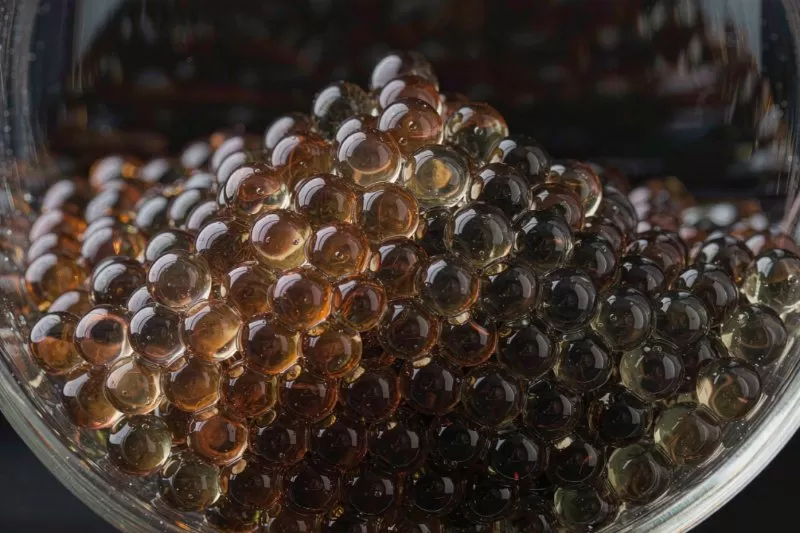
SEPLITE® LSC-710 is a macroporous chelating resin developed for selective heavy metal removal and recovery. Its polymer matrix is based on a crosslinked styrene-divinylbenzene structure, while amino-carboxylic acid functional groups provide the active sites for metal capture.
These functional groups interact strongly with copper ions and form stable chelate structures. This mechanism is different from non-selective physical adsorption. The functional groups show a much stronger affinity for copper than for common background ions such as sodium, calcium, and magnesium.
When copper-bearing wastewater passes through the resin bed, copper ions are selectively retained while most non-target ions continue through the system. This allows the resin to operate effectively even in high-salinity or multi-metal wastewater where the copper concentration is far lower than the total concentration of dissolved ions.
The macroporous structure also supports rapid mass transfer and provides access to the internal functional groups. As a result, SEPLITE® LSC-710 can combine high copper selectivity with practical dynamic adsorption capacity under industrial flow conditions.
This selective capture mechanism makes the resin especially suitable for etching wastewater, electroplating rinse water, and hydrometallurgical solutions where copper must be separated from a complex ionic background.
Combining Copper Removal with Resource Recovery
Once the resin reaches its operating capacity, the captured copper can be desorbed using sulfuric acid. The desorption process releases copper from the resin and produces a concentrated copper sulfate solution.
Instead of treating this eluate as another wastewater stream, the copper-rich solution can be returned to production or sent to an appropriate downstream recovery process. In suitable projects, the desorption solution can be reused directly within the plant, reducing both fresh chemical demand and waste disposal requirements.
The resin is then regenerated and returned to the adsorption cycle.
This adsorption-desorption-regeneration sequence changes the economics of wastewater treatment. Copper is no longer converted into a large volume of low-value hazardous sludge. It is separated into a concentrated and reusable liquid stream, while the treated water is purified for compliant discharge or further reuse.
The result is a process that addresses both environmental compliance and resource efficiency.
Why Continuous Ion Exchange Improves Resin Performance
Resin selection is only part of the solution. The way the resin is operated has a major influence on effluent stability, resin utilization, regenerant consumption, and overall project economics.
A conventional fixed-bed system operates sequentially. One column adsorbs copper until it approaches saturation, after which the column is taken offline for washing, desorption, regeneration, and rinsing. The copper concentration in the outlet may gradually rise as the resin bed approaches breakthrough, and additional resin capacity is often installed to provide a sufficient safety margin.
Sunresin continuous ion exchange technology uses multiple resin columns operating in coordinated stages. Adsorption, washing, desorption, regeneration, and rinsing can occur simultaneously in different columns, while automated valve switching moves each column through the process sequence.
This multi-column configuration provides several operational advantages. The lead column captures most of the copper, while downstream columns provide polishing and protect final water quality. When the first column approaches breakthrough, the system automatically changes its position in the operating sequence without interrupting treatment.
The continuous configuration helps maintain a more stable outlet concentration, improve effective resin utilization, reduce the amount of resin required for peak conditions, and decrease equipment footprint. Automated operation also reduces manual intervention and improves process repeatability.
For existing factories where production space and labor availability are limited, these practical advantages can be as important as the copper removal efficiency itself.
Flexible Integration with Existing Treatment Processes
Chelating resin technology does not necessarily replace all existing copper treatment equipment. In many projects, it is most effective when integrated with upstream separation processes.
For a high-concentration stream, solvent extraction or another bulk recovery process may be used first, while the resin system treats the remaining copper and provides the final polishing step. In other applications where the feed concentration and composition are already suitable, chelating resin can be used directly to achieve both copper recovery and compliant discharge.
Chemical precipitation and filtration may also be used as pretreatment to remove suspended solids or reduce an exceptionally high contaminant load. The resin then selectively captures the remaining dissolved copper.
This flexibility allows Sunresin to design the process around the actual wastewater rather than applying one standard configuration to every project.
The final process route depends on copper concentration, flow rate, pH, salinity, competing ions, suspended solids, target outlet quality, copper reuse requirements, and the customer’s existing treatment infrastructure.
Industrial Case: Copper Recovery from Etching Wastewater
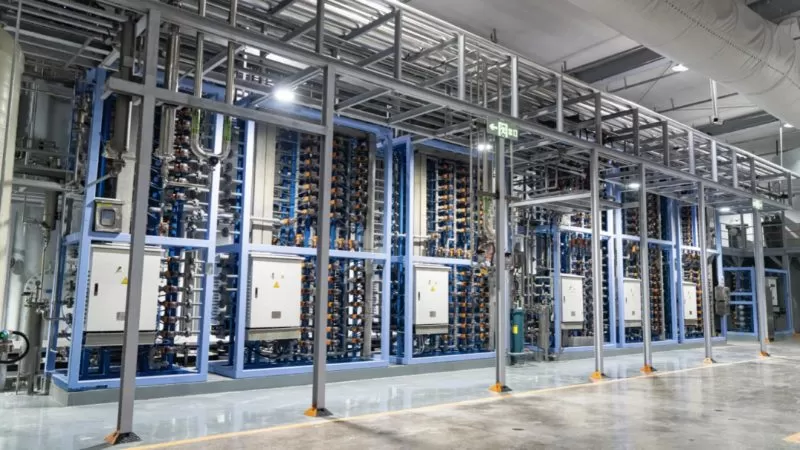
Sunresin applied its chelating resin and continuous ion exchange technology in an etching wastewater copper recovery project at an industrial facility in Huizhou, Guangdong.
Before full-scale implementation, the process was verified through laboratory and pilot testing. Based on the testing results, the system was designed using a copper loading capacity of 30 kilograms per cubic meter of resin.
During operation, the copper-bearing wastewater passed through the multi-column continuous ion exchange system. SEPLITE® LSC-710 selectively captured the copper while allowing most non-target ions to pass through.
The treated water achieved a copper concentration below 0.3 mg/L, corresponding to a copper removal efficiency of more than 99.99%.
After saturation, the resin was desorbed using sulfuric acid. The recovered copper-rich solution was returned for further utilization, enabling the project to convert copper from a wastewater contaminant into a reusable resource.
The multi-column system operated collaboratively under a high level of automation, reducing manual workload and maintaining stable continuous treatment.
Practical Advantages Under Industrial Conditions
The system operates at ambient temperature and pressure and does not require organic solvents. This simplifies operation and avoids the safety and environmental management requirements associated with solvent extraction.
Because the copper-rich desorption solution can be returned to production under suitable conditions, the process does not need to create a large additional wastewater volume. The modular multi-column configuration also provides a compact footprint, making it easier to install within existing plants where space is limited.
The system’s automated operating sequence controls adsorption, washing, desorption, regeneration, and rinsing. This helps reduce dependence on operator experience while maintaining stable water quality.
The high selectivity of the chelating resin also means that adsorption capacity is used primarily for copper rather than being consumed by the large concentrations of calcium, magnesium, sodium, and other ions that may be present in the wastewater.
Together, these characteristics support lower material consumption, reduced resin losses, stable operation, and more predictable long-term treatment costs.
Laboratory and Pilot Testing Before Full-Scale Implementation
Industrial wastewater composition can vary significantly between facilities. Even streams generated by the same production process may differ in copper concentration, pH, salinity, organic content, suspended solids, and competing metal ions.
For this reason, Sunresin normally recommends laboratory testing before finalizing a full-scale system.
A representative 5–20 liter wastewater sample can be tested in the Sunresin laboratory over multiple adsorption and regeneration cycles. The testing program evaluates dynamic adsorption capacity, copper breakthrough behavior, desorption recovery, resin regeneration, strength retention, and treated-water quality.
The results help determine whether copper recovery is technically and economically justified and identify the most appropriate resin, pretreatment route, column configuration, operating velocity, regeneration method, and process cycle.
For more complex projects, pilot testing can further verify hydraulic performance, automation logic, copper recovery concentration, and long-term resin behavior before industrial scale-up.
This staged approach reduces project risk and ensures that the final design is based on the customer’s actual wastewater rather than theoretical assumptions.
From Waste Treatment to Circular Resource Utilization
Copper-bearing wastewater should not automatically be viewed only as a disposal liability.
When the copper concentration, wastewater volume, and process conditions are suitable, selective resin technology can transform the treatment system into a resource recovery process. The same adsorption step that protects the final discharge also concentrates copper into a reusable form.
Sunresin combines SEPLITE® LSC-710 chelating resin with laboratory testing, process development, continuous ion exchange equipment, automation, commissioning, and long-term technical support.
This integrated capability allows customers to move beyond conventional end-of-pipe treatment and evaluate wastewater according to its recoverable resource value.
From PCB etching wastewater and electroplating rinse water to hydrometallurgical leach solutions, Sunresin helps customers remove copper selectively, recover it efficiently, and return more value to the production process.
For facilities still relying primarily on precipitation or other conventional methods, the first step is to evaluate the actual water chemistry and operating conditions. Sunresin application engineers can review the wastewater data, assess the recovery potential, and recommend an appropriate process route for both compliant discharge and copper resource recovery.
Free Quote
Resources
Adsorbent Resin
Bio-Pharmaceutical & Life Science
Enzyme Carriers
Hydrometallurgy & Mining
Chelating Resin
Chemical Industry
Chromatographic Media
Wastewater Treatment&Reuse
Food & Beverage Industries
Ion Exchange Resin
Civil & Industry Water Treatment
Equipments And Projects
Plant Extraction
Catalyst Resin
Solid Phase Peptide Synthesis
Product
Application
Contact Us
Sunresin Park,No.135, jinye Road, Xi’an Hi-tech Industrial Development Zone, Shaanxi-710076, China
seplite@sunresin.com
seplite_europe@sunresin.com
+86-29-89182091
Our Product List

Amino Acid Separation and Purification

Mobile Sorption Module for Gold Extraction

PFAS Removal

Bio-Pharmaceutical & Life Science
Modern biopharmaceutical technologies typically use biological microbial fermentation...

Chemical Industry
Purification of chemical compounds has become a vital part of most industrial processes.

Drinking Water Treatment
Drinking water is essential to life. Every day every human being has to drink and use water for food preparation.

Food & Beverage Industries
Food is closely related to everyone, and the finishing of food comes from people's relentless pursuit...

Hydrometallurgy & Mining
Hydrometallurgy is a technique for extractive metallugry involving the three general area...

Direct Lithium Extraction (DLE)
Sunresin is the major DLE lithium sorbent producer in China which mainly used for extraction lithium from salar brine and geothermal brine etc with high efficiency.

Industry Water Treatment
There are many uses of water in industry and, in most cases, the used water also needs treatment to render...

Plant Extraction
Plant Extraction is a process to gather the trace bioactive compounds from the tissue of a plant.

VOCs Treatment
With the widespread use of chemical products in the industry, more and more organic...

Wastewater Treatment
Wastewater treatment is the process of converting wastewater into an effluent that can be discharged
Latest News
03
2026 11
Sunresin Strengthens Raw Material Supply with Acquisition of Ningxia Baoyun New Materials
Sunresin has completed the acquisition of 100% of Ningxia Baoyun New Materials, strengthening its supply chain for divinylbenzene (DVB), a key raw material used in the production of adsorption and separation materials.
15
2026 07
Sunresin Nuclear-Grade Ion Exchange Resin Passes Product Appraisal, Supporting Reliable Nuclear Power Water Chemistry Control
Sunresin has successfully passed the product appraisal for its domestically developed nuclear-grade ion exchange resin, marking an important milestone in the development of high-performance chemical materials for nuclear power applications.
14
2026 07
Sunresin and ChromaGenix Partner to Expand Global Access to AAV Purification Technologies
The cooperation is designed to expand access to advanced AAV purification technologies and provide stronger regional support for cell and gene therapy developers across Asia, Europe and the Americas.
Leave a Message
Please send any questions you want to know, we will reply to you immediately.
Choose File
Submit