




Advanced Ion Exchange Technology for Efficient Short-Chain PFAS Removal
As global regulations on PFAS continue to become more stringent, the treatment of short-chain PFAS compounds is emerging as one of the biggest technical challenges in the water treatment industry.
Compared with traditional long-chain PFAS contaminants such as PFOA and PFOS, short-chain PFAS compounds typically exhibit:
- Higher mobility in water systems
- Lower hydrophobicity
- Greater treatment difficulty
- Faster environmental migration
As a result, conventional treatment technologies are facing increasing pressure to achieve ultra-low discharge and drinking water standards.
Recent industry discussions at major environmental events, including IFAT Munich 2026, further highlighted the rapidly growing demand for efficient and scalable PFAS treatment technologies capable of addressing both long-chain and short-chain PFAS contaminants.
The Increasing Complexity of PFAS Treatment
PFAS contamination is now a major concern across multiple industries and water systems, including:
- Drinking water
- Groundwater remediation
- Industrial wastewater
- Landfill leachate
- Semiconductor wastewater
- Firefighting foam contaminated sites
The complexity of PFAS treatment is no longer limited to simply removing a few regulated compounds.
Today, customers are increasingly concerned about:
- Broad-spectrum PFAS removal
- Compliance with evolving regulations
- Long-term operating costs
- Resin replacement frequency
- System footprint
- Sustainable treatment technologies
In particular, short-chain PFAS compounds are becoming a major focus due to their lower adsorption tendency in conventional activated carbon systems.
Why Ion Exchange Is Gaining Attention for PFAS Removal
Among currently available PFAS treatment technologies, ion exchange has become one of the most promising solutions for achieving high-efficiency removal under low concentration conditions.
Compared with traditional granular activated carbon (GAC), ion exchange technology offers several advantages:
- Faster adsorption kinetics
- Higher selectivity toward PFAS compounds
- Better removal performance for short-chain PFAS
- Compact equipment design
- Stable operation at low contaminant concentrations
These advantages make ion exchange particularly attractive for applications where ultra-low PFAS discharge levels are required.
As regulatory standards continue tightening globally, many water treatment operators are increasingly evaluating ion exchange as an alternative or complementary solution to conventional PFAS treatment technologies.
Sunresin PFAS Ion Exchange Solution
Leveraging extensive expertise in adsorption and separation technologies, Sunresin has developed advanced ion exchange materials specifically designed for PFAS treatment applications.
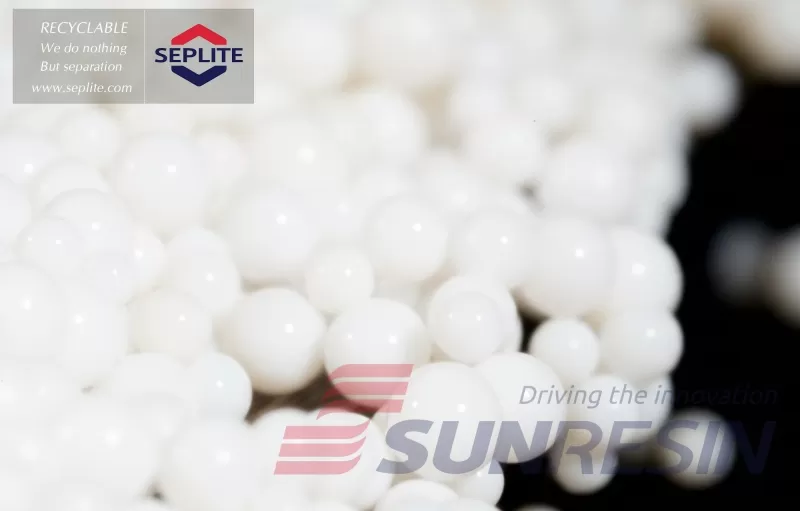
One of the key products is SEPLITE® LSI 106G, a high-performance strong base anion exchange resin developed for PFAS and perchlorate removal.
The resin is suitable for applications including:
- Drinking water treatment
- Industrial wastewater treatment
- Groundwater remediation
- Landfill leachate treatment
- Water reuse systems
According to product performance data, SEPLITE® LSI 106G offers:
- Removal of PFOA and PFOS to ppt levels
- Approximately 30% higher capacity compared with conventional anion exchange resins
- Faster kinetics than GAC
- NSF/ANSI 61 and WQA certification
These characteristics enable more efficient PFAS removal under increasingly demanding operating conditions.
More information about Sunresin PFAS solutions:
https://www.seplite.com/pfas-removal/
Localized Support Becomes Increasingly Important
As PFAS regulations accelerate globally, customers are placing growing importance not only on treatment performance, but also on:
- Local inventory availability
- Technical support capability
- Project delivery speed
- Supply chain reliability
In recent technical discussions with European customers and industry partners, localized service capability has become one of the key factors influencing project implementation.
With warehouse and support operations in Düsseldorf, Germany, Sunresin continues strengthening its localized support capability for European environmental projects.
Future Trends in PFAS Treatment
As PFAS regulations continue evolving worldwide, future treatment technologies will increasingly focus on:
- Higher selectivity
- Better short-chain PFAS removal
- Lower operating costs
- Reduced environmental footprint
- Sustainable regeneration and disposal strategies
The market is also moving toward more integrated treatment approaches combining adsorption, ion exchange, membrane separation, and resource recovery technologies.
Through continuous innovation in ion exchange materials and water treatment technologies, Sunresin remains committed to supporting global customers with efficient and sustainable PFAS treatment solutions.
Free Quote
Resources
Adsorbent Resin
Bio-Pharmaceutical & Life Science
Enzyme Carriers
Hydrometallurgy & Mining
Chelating Resin
Chemical Industry
Chromatographic Media
Wastewater Treatment&Reuse
Food & Beverage Industries
Ion Exchange Resin
Civil & Industry Water Treatment
Equipments And Projects
Plant Extraction
Catalyst Resin
Solid Phase Peptide Synthesis
Product
Application
Contact Us
Sunresin Park,No.135, jinye Road, Xi’an Hi-tech Industrial Development Zone, Shaanxi-710076, China
seplite@sunresin.com
seplite_europe@sunresin.com
+86-29-89182091
Our Product List

Amino Acid Separation and Purification

Mobile Sorption Module for Gold Extraction

PFAS Removal

Bio-Pharmaceutical & Life Science
Modern biopharmaceutical technologies typically use biological microbial fermentation...

Chemical Industry
Purification of chemical compounds has become a vital part of most industrial processes.

Drinking Water Treatment
Drinking water is essential to life. Every day every human being has to drink and use water for food preparation.

Food & Beverage Industries
Food is closely related to everyone, and the finishing of food comes from people's relentless pursuit...

Hydrometallurgy & Mining
Hydrometallurgy is a technique for extractive metallugry involving the three general area...

Direct Lithium Extraction (DLE)
Sunresin is the major DLE lithium sorbent producer in China which mainly used for extraction lithium from salar brine and geothermal brine etc with high efficiency.

Industry Water Treatment
There are many uses of water in industry and, in most cases, the used water also needs treatment to render...

Plant Extraction
Plant Extraction is a process to gather the trace bioactive compounds from the tissue of a plant.

VOCs Treatment
With the widespread use of chemical products in the industry, more and more organic...

Wastewater Treatment
Wastewater treatment is the process of converting wastewater into an effluent that can be discharged
Latest News
15
2026 07
Sunresin Nuclear-Grade Ion Exchange Resin Passes Product Appraisal, Supporting Reliable Nuclear Power Water Chemistry Control
Sunresin has successfully passed the product appraisal for its domestically developed nuclear-grade ion exchange resin, marking an important milestone in the development of high-performance chemical materials for nuclear power applications.
14
2026 07
Sunresin and ChromaGenix Partner to Expand Global Access to AAV Purification Technologies
The cooperation is designed to expand access to advanced AAV purification technologies and provide stronger regional support for cell and gene therapy developers across Asia, Europe and the Americas.
26
2026 05
Sunresin Completes Strategic Investment in FENGXINZE to Further Expand Industrial Chromatography Business
Sunresin recently completed a strategic investment in FENGXINZE, further expanding its business footprint in industrial chromatography and strengthening its presence in the life science separation and purification sector.
Leave a Message
Please send any questions you want to know, we will reply to you immediately.
Choose File
Submit